Anyone suffering from aching or inflamed joints can benefit from joint support supplements. These should contain a combination of glucosamine, chondroitin and several other clinically-proven vitamins, trace elements and amino acids.
Joint supplement benefits
Cartilage and joint support micronutrients have been found beneficial by a large body of clinical studies.
- They increase long-term mobility (18-24 months4) by helping to build cartilage5,
- They are based on natural micronutrients, convenient, prescription-free and non-invasive,
- They present an affordable and natural alternative to arthritis medications6.[/list]

1st place: amitamin arthro360

With 110 points, amitamin’s arthro360 is the most complete product in our test. Its combination and dosage of micronutrients is scientifically effective with 1,800 mg of glucosamine sulphate and chondroitin sulphate, plus MSM, Omega-3 fatty acids DHA and EPA, as well as the super antioxidant pine bark extract.
The Triple Pack for three months starts at AUD 49.95 per pack per month. The exclusive distributor for Australia and New Zealand offers currently free shipping. A detailed description can be found here.
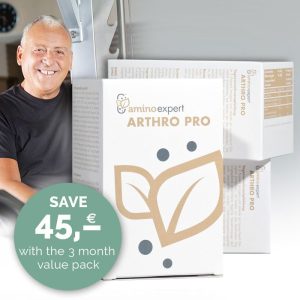
2nd place: aminoexpert Arthro Pro

Following closely behind amitamin’s arthro360, with 100 points in our test: ARTHRO PRO by aminoexpert. Vitaminsbest started selling it recently in Australia and New Zealand starting at AUD 44.50 for a monthly pack in the three months order. They also offer currently free shipping to Australia and New Zealand.
Although it lacks omega-3 fish oils, the overall ingredients and dosage is effective with glucosamine, chondroitin, MSM, SAMe, amino acids and pine bark extract. Find a more detailed description here.
3rd place: Dr. Jenson’s formula-X Joint Care Pro
Still highly effective, but not as complete as our number one and two is: Dr. Jenson’s formula-X Joint Care Pro with still 70 points in our test. With AUS 149.00 however, it has the highest monthly price in the top group. (…)
[umd title=”Compare the top 3 products side by side” img=”http://jointspecialists.org/wp-content/uploads/2015/01/direct-comparison.png” id=”1764″ width=”1200″][/umd]
How we tested
 To determine the best possible products for your joints we have compared and analysed the nutrients, dosages, costs and customer service of 24 of the best known joint and cartilage supplements available on the UK high street or for online purchase .
To be included in the test, all products had to
- arrive within 5 working days of purchase,
- have a customer support hotline available,
- be available on the high-street or via SSL secured websites,
- be purchasable via credit card & PayPal.
At first glance, many products appear to be similar. But under closer scrutiny the differences in the “nutrient-stacks” and quantities of nutrients provided become significant.
The best products for your joints
A quality arthritis food supplement should include the following micronutrients.
Each of them has been clinically proven beneficial for joint health, are well-researched and have no or very small side effects as a food supplement:
- Glucosamine
- Chondroitin
- MSM (methyl-sulfonyl-methane)
- Omega-3 from fish oil (EPA, DHA)
- Pine bark extract
- Amino acids
- Hyaluronic acid
- Collagen hydrolysate
- Selenium, manganese, copper, zinc
- Vitamin E, vitamin D and vitamin C
Final remarks
The food supplements featured in this comparison are just a few from a very large amount of joint & cartilage support products available on the market. The metabolic benefits of the micronutrients are mostly well documented.
Please keep in mind that some products, which that have achieved lower scores in our test or that have not been listed may be more beneficial than other products depending on individual conditions. Nevertheless, we strongly believe that we’ve made the criteria as transparent and fair as possible.
This overview can and must not replace a professional medical assessment and diagnosis conducted by a fully qualified and registered orthopedists, rheumatologists or sports medicine specialists. This comparison is therefore not meant to promote unsupervised self-medication.

Finally, please keep in mind that these three lifestyle factors are crucial for your joint health:
- A balanced diet with unprocessed low fat meats and plenty of whole foods, fruit and vegetables,
- regular low-impact exercise such as walking and swimming avoiding stress on the joints, as well as
- the prevention of obesity and the resulting overuse of joints.
Please consider these factors, as well as regular exercise, a healthy, well-balanced diet rich in whole foods, fish and low in red meats – not only for your joints, but indeed for you overall health, vitality and longevity.
Bibliography:
- “Lerna et al. 2010. Supplementation of diet with krill oil protects against experimental rheumatoid arthritis. BMC Musculoskeletal Disorders 11, 136, doi: 10.1186/1471-2474-11-136” ↩
- “Brien et al. 2008. Systematic review of the nutritional supplements dimethyl sulfoxide (DMSO) and methylsulfonylmethane (MSM) in the treatment of osteoarthritis. Osteoarthritis Cartilage 16(11), 1277-1288” ↩
- “Dzielska-Olczak & Nowak. 2012. Anti-inflammatory therapy in ostheoarthritis including omega 3 and omega 6 fatty acids. Polish Merkur Lekarski 32(191), 329-334; Calder. 2006. n-3 Polyunsaturated fatty acids, inflammation, and inflammatory diseases. American Journal of Clinical Nutrition 83(suppl), 1505S-1519S” ↩
- “Van Vijven et al., 2012. Symptomatic treatment with chondroprotective and collagen derivatives for osteoarthritis: a systematic review. Osteoarthritis Cartilage 20 (8), 809-821″ ↩
- “http://www.ncbi.nlm.nih.gov/pubmed/16309928” ↩
- “http://ard.bmj.com/content/early/2015/01/14/annrheumdis-2014-206792.full” ↩
- Feil, W., “Die Dr. Feil Strategie. Arthrose und Gelenkschmerzen überwinden.”, 1. Aufl. 2013, S. 49; ISBN 978-3-00-040191-6 ↩
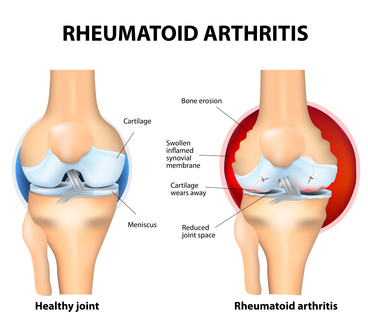
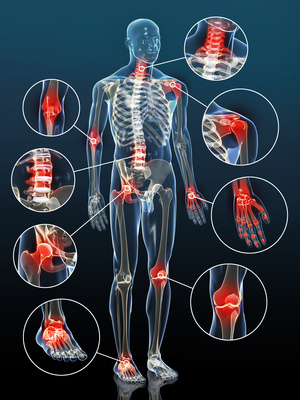
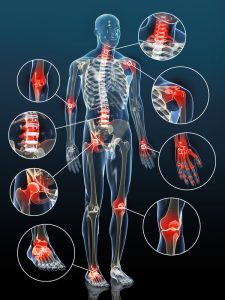 This swelling causes the joints to become stiff, restricting movement and causing pain and discomfort. As a result the cartilage and bone can start to breakdown and thin, further aggravating the joints and leading to disease progression.
 Many people that suffer from arthritis are also at risk of developing osteoporosis. Therefore, any arthritis diet foods should contain nutrients that support the strengthening of the joints and bones.
 Research shows that there is increasing evidence that oxidative stress plays a major role in the degradation of joints affected by rheumatoid arthritis
 The use of antioxidant therapy for the treatment of rheumatoid arthritis has been a subject of many recent studies. Antioxidants such as vitamin E and superoxide dismutase have been successfully used in therapy to treat inflammation in animal experiments
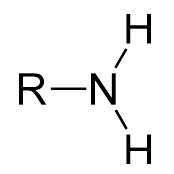 Glucosamine belongs to the class of amino sugars. Chemically it only differs from the glucose molecule by one amino group, which is not present in glucose.
 Glucosamine is thought to relieve pain and inflammation and help in the formation of new cartilage tissue. This has been confirmed by many orthopaedists in practice.
 In 2012 Selvan and colleagues tested the influence of glucosamine sulphate and a combination of glucosamine sulphate with anti-inflammatory drugs. Their subjects suffered from mild to moderate osteoarthritis
  If glucosamine is used at an early stage and over a long period of time, it can potentially reduce the need to take anti-inflammatory medication (NSAIDs). Importantly, this means that the side effects of pain killers are reduced. Ultimately, this improves the quality of life of those affected.
 The combination of glucosamine with other substances frequently leads to an altered effect. For example, when glucosamine sulphate is administered in combination with omega-3 fatty acids or vitamins, its effect seems to be stronger
  Dietary supplements containing methylsulfonylmethane have been used in the United States for quite some time. Nonetheless, there have been no clinical studies researching the effects of this sulfone prior to 2006.